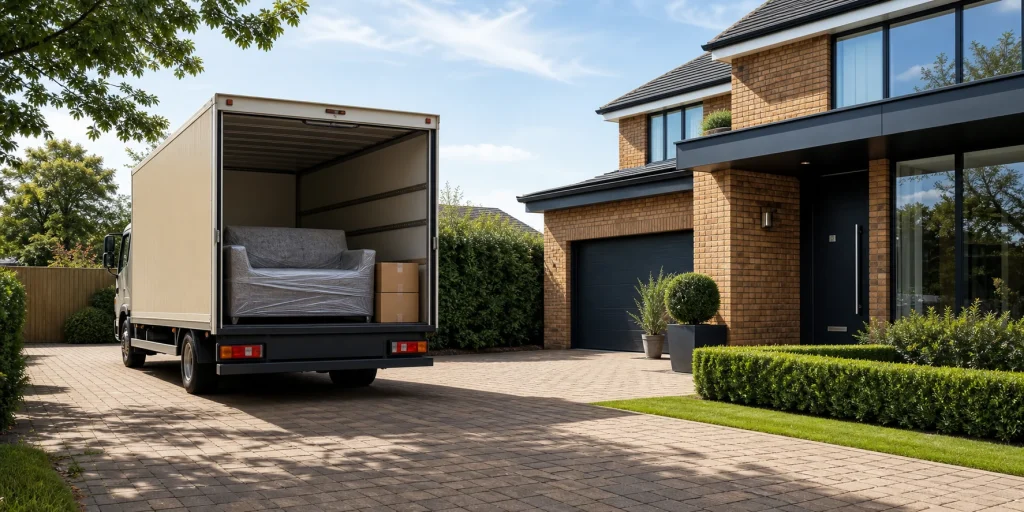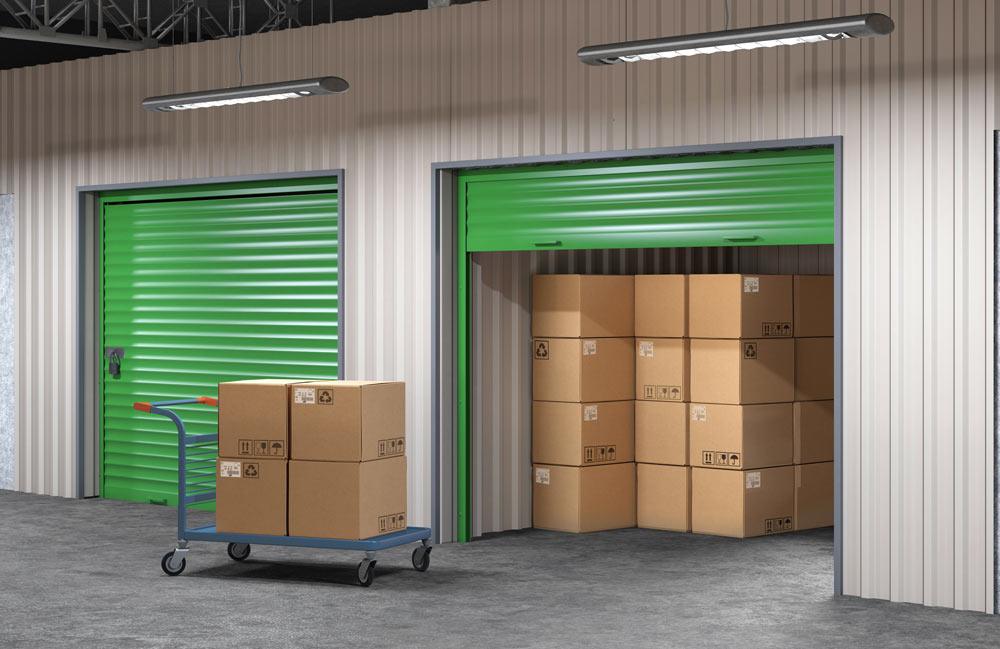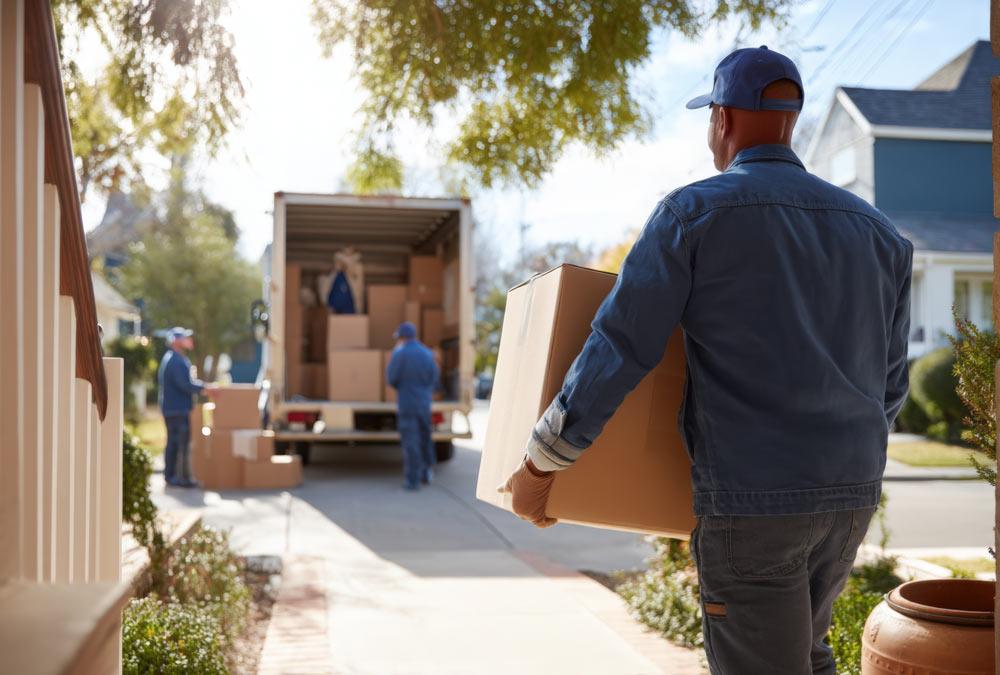

Sofas and boxed belongings are often the items people worry about most on moving day. A sofa can be awkward, heavy and easily marked, while everyday boxes may contain a mix of fragile, useful and sentimental things.
Professional packing reduces those risks by combining the right materials, a clear system and trained handling from room to room. For a whole-house move, that can make the difference between a stressful scramble and a tidy, controlled process.
Why sofas need more than a quick cover
A sofa looks sturdy, but it is one of the easiest items to damage during a move. Fabric can catch on door frames, leather can scuff against walls, legs can loosen if the weight is pulled at the wrong angle, and large frames can twist when lifted unevenly.
Professional movers start by looking at the sofa as an object that has to travel through several tight spaces, not just as something to be lifted. They check access points, awkward turns, loose cushions, removable feet and any vulnerable edges before the item is moved. That planning matters because most sofa damage happens during handling, not when the sofa is simply sitting in the vehicle.
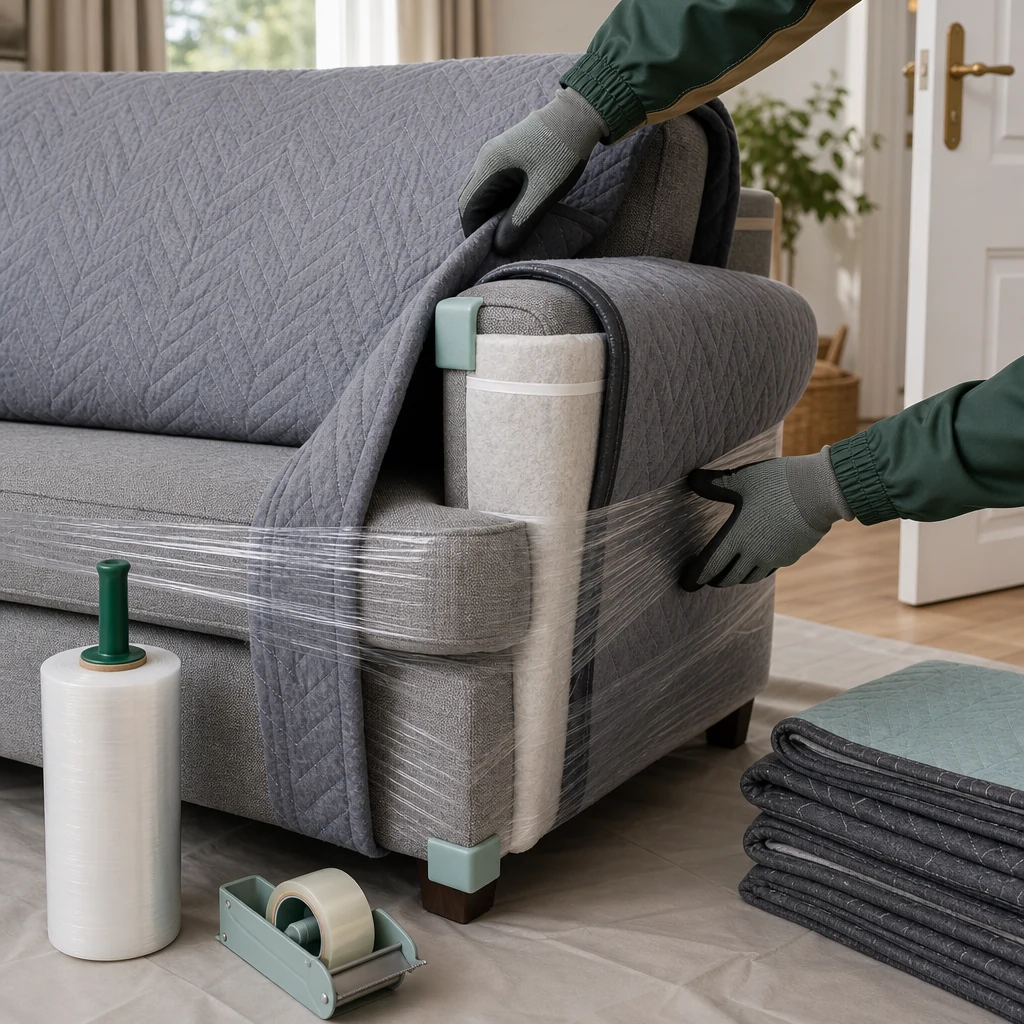
Good packing also keeps surfaces clean. Protective wrapping helps guard against dust, rain, garden paths, driveways and the inside of the removal vehicle. For pale, grey or textured sofas, that barrier is especially useful because small marks can be obvious once the furniture is placed in a bright living room.
It is not about wrapping everything in excessive layers. It is about using the right protection in the right places, then carrying the sofa in a way that keeps pressure away from arms, corners, seams and feet.
How trained packing protects boxed goods
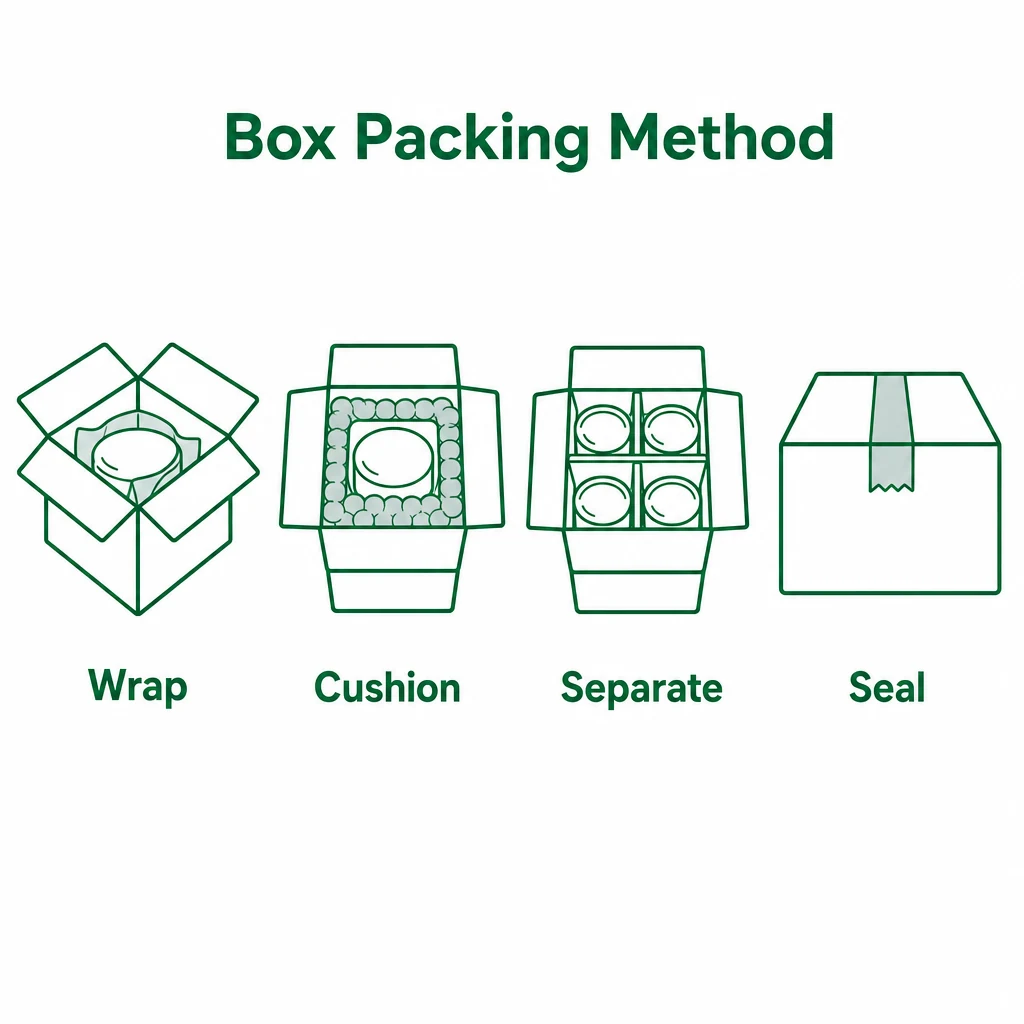
Boxes are only as protective as the way they are packed. A strong box can still fail if it is overfilled, unevenly weighted or filled with items that move around inside. Professional packing aims to make each box stable, sensible to lift and suited to the room it came from.
For everyday belongings, that usually means grouping similar items together, wrapping breakables individually, filling gaps so contents cannot shift, and keeping heavy items in smaller boxes. Books, crockery, kitchen items, ornaments, toiletries, toys and office equipment all need slightly different handling.
A trained packer also thinks ahead to unpacking. Clear labelling, room-by-room organisation and sensible grouping mean the boxes are easier to place correctly at the new property. That reduces unnecessary handling, which is another quiet way to reduce damage risk.
If you want support with the whole process, Caremove offers professional packing and unpacking for home moves, including careful preparation of furniture and boxed belongings before moving day.
What happens before moving day
The best packing work starts before the van arrives. A professional team will consider access, volume, item types and any belongings that need particular care. This helps them bring suitable materials and plan the order of packing, loading and unloading.
For a whole-house move, the sequence matters. Items used daily may need to be packed later, while loft, spare room and storage items can often be prepared earlier. Sofas, beds, dining furniture and larger pieces may need to be handled around boxes rather than boxed goods being stacked in the way.
Preparation also gives you a chance to separate essentials. Medication, chargers, documents, keys, basic toiletries and a change of clothes are usually better kept with you. Professional packing is most useful when it supports the move without taking control of the personal items you need close to hand.
For larger moves, a broader house removals service can bring packing, lifting, transport and placement together as one organised job rather than several disconnected tasks.
The role of materials, method and careful loading
Protective materials are important, but method matters just as much. Common moving materials can include strong boxes, paper, wrap, furniture covers, tape, labels and protective blankets. Used well, they help prevent rubbing, crushing, moisture marks and movement in transit.
Boxed goods should be packed so weight is balanced and the base is properly supported. Fragile items need cushioning, but they also need to be prevented from knocking against each other. Plates, glasses and ceramics are usually safer when packed with their shape and pressure points in mind rather than simply surrounded by loose padding.
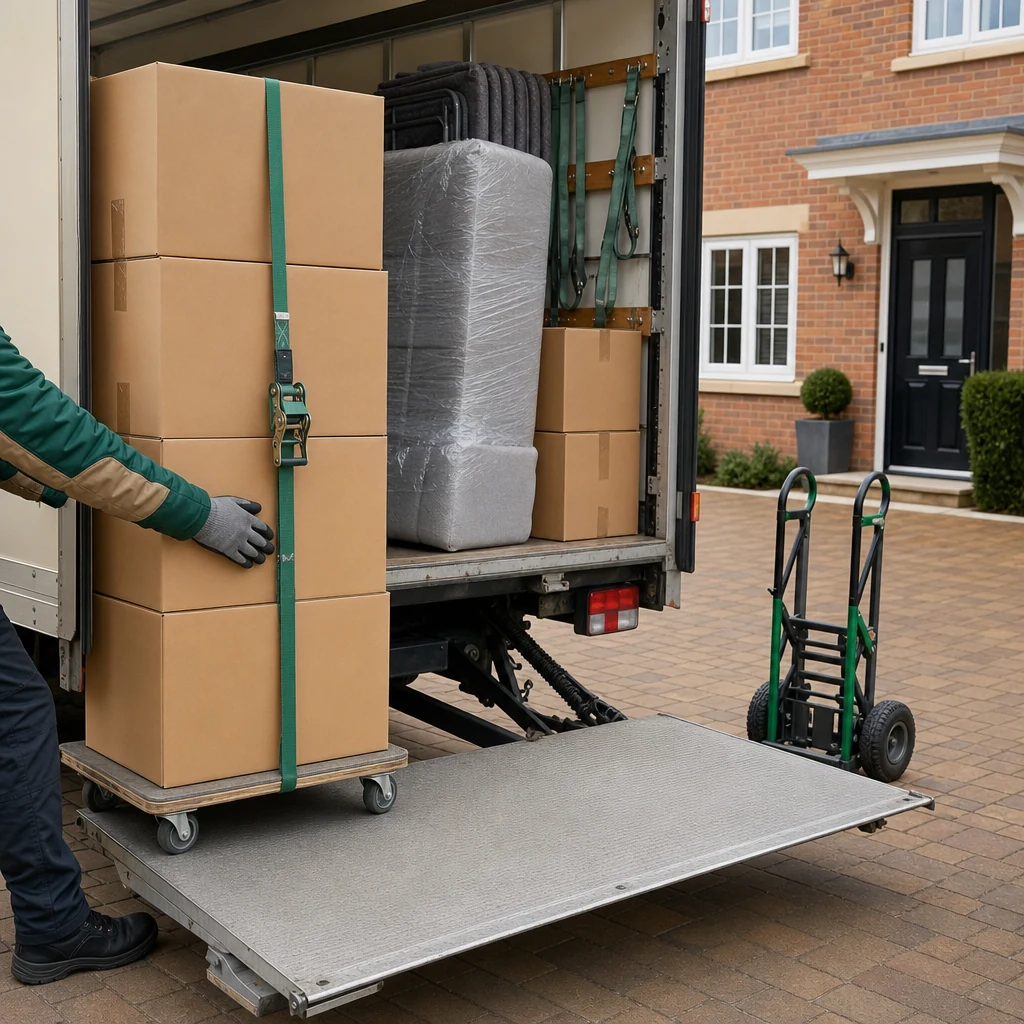
Loading is the next layer of protection. Heavier boxes should not sit on soft furnishings. Sofas should be positioned so they are supported and not pressed against sharp corners. Items should be secured to reduce movement during normal driving, braking and turning.
This is where experience shows. A careful team does not treat the vehicle as empty space to fill. They build a load that protects what is already inside, keeps weight sensible and makes unloading at the other end more efficient.
Why professional handling helps during a whole-house move
During a whole-house move, the risk is not just one dramatic accident. It is the build-up of small handling moments: a box placed in the wrong room, a sofa squeezed through a doorway too quickly, a fragile item packed with something heavy, or a rushed decision when everyone is tired.
Professional movers reduce those moments by working to a system. They know how to lift bulky furniture, how to communicate around corners, how to protect doorways where needed and how to keep packed goods moving in a steady order.
That steady pace is one of the biggest advantages. A tidy move is not slow; it is controlled. When the team knows what is packed, where it belongs and how it should be carried, there is less need for last-minute repacking or repeated lifting.
For the customer, it also means fewer decisions on the day itself. You still stay in control of what matters, but the physical process of protecting, carrying and placing items is handled by people who do it regularly.
How to get the most from packing support
Professional packing works best when it is paired with a little preparation from you. You do not need to have everything perfectly organised, but a few simple steps can make the service even smoother.
- Put important documents, jewellery, medication and personal essentials somewhere separate before packing begins.
- Tell the team about any fragile, sentimental or awkward items before they are wrapped or moved.
- Point out sofas, furniture or boxed goods that need to go to a specific room at the new property.
- Declutter items you already know you do not want to take, so packing time is focused on belongings you still need.
- Keep access clear where possible, especially around large furniture, stairs, entrances and driveways.
These small steps help the team protect your belongings in a way that suits your home, your furniture and your moving day priorities.
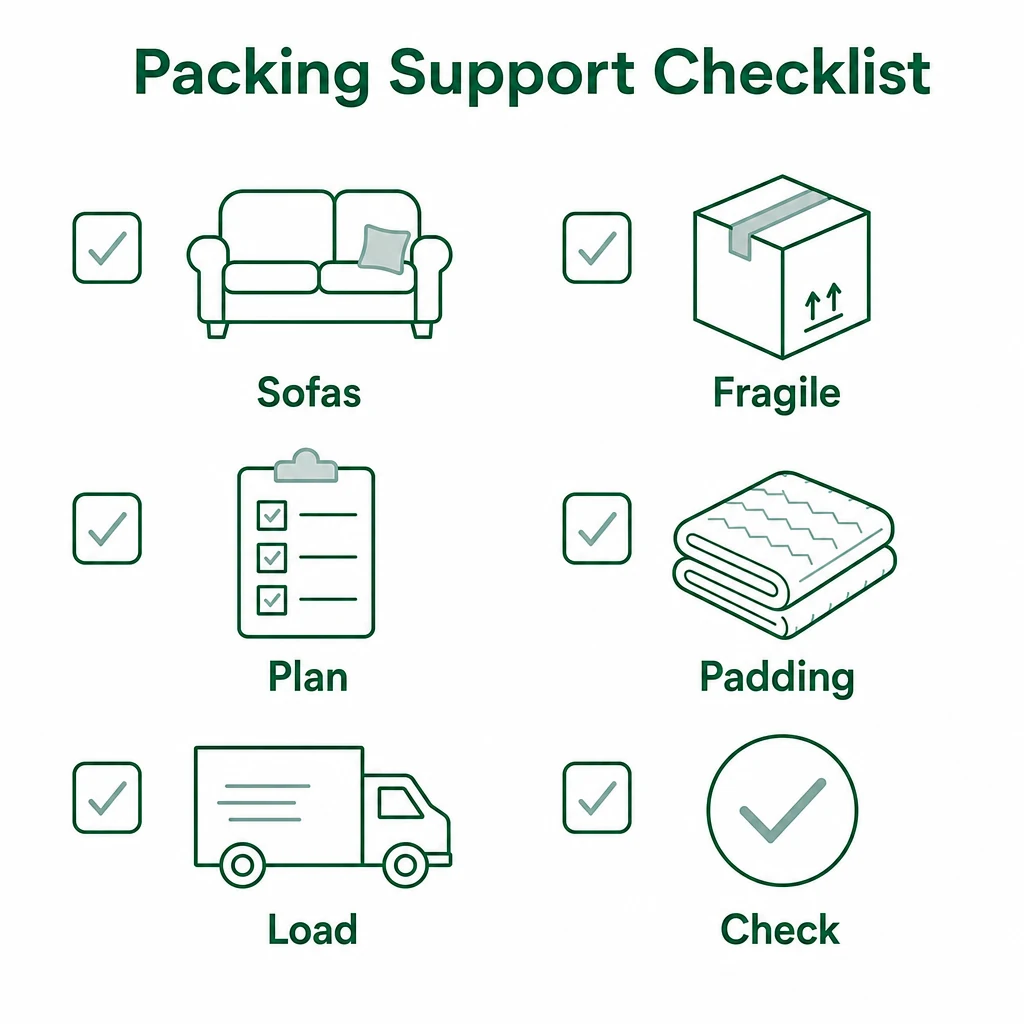
- Sofas need planned handling because fabric, corners, feet and frames can be vulnerable during tight moves.
- Well-packed boxes are balanced, clearly labelled and filled so contents cannot shift in transit.
- Professional packing reduces repeated handling, which helps lower the risk of marks, scuffs and breakages.
- A whole-house move runs more smoothly when packing, loading, transport and room placement are organised together.
Frequently asked questions
Is professional packing only for fragile items?
No. Fragile items benefit from careful packing, but so do everyday belongings, bulky furniture, kitchen goods, books and soft furnishings. The aim is to make the whole move more organised and reduce avoidable handling risks.
Can movers pack a sofa as well as boxed items?
Yes. A professional team can protect sofas with suitable covers or wrapping, remove loose cushions where appropriate and handle the item carefully through doors, hallways and loading areas.
Should I pack anything myself before the team arrives?
It is sensible to keep personal essentials with you, such as medication, documents, keys, chargers and valuables. The rest can usually be discussed with the team so the packing is done in a clear order.
Does unpacking help reduce damage too?
It can. Careful unpacking means boxes are opened in the right rooms, items are handled fewer times and furniture or belongings can be placed more calmly at the new property.
Plan a calmer move
If you want sofas, boxed goods and everyday belongings handled with care, Caremove can help with practical packing and unpacking support for your home move.