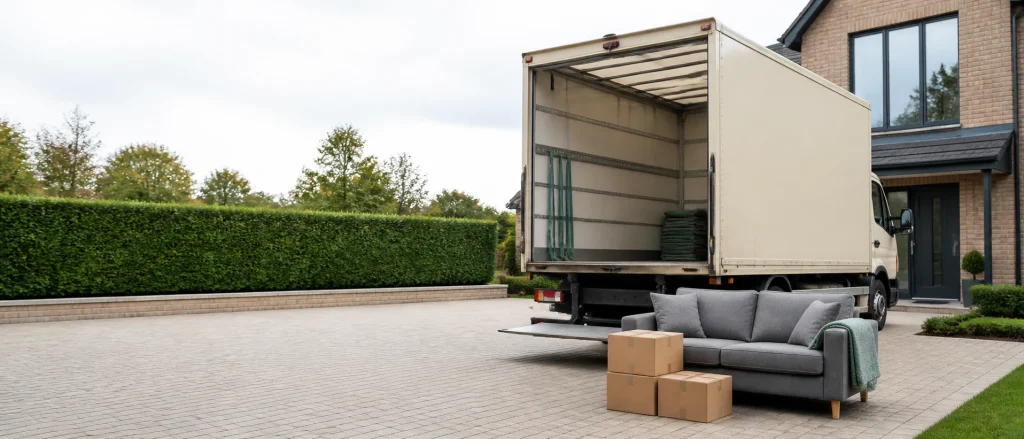

A well labelled box is a small thing that can make a big difference on moving day. When every carton has a clear destination and a simple note about what is inside, the new home starts to make sense much sooner.
Professional packing teams do not label boxes at random. They use a practical system that helps with loading, protects important items, and makes unpacking feel less like searching through a wall of cardboard.
Why box labels matter after a whole house move
During a whole house move, there may be dozens of boxes moving through the property at once. Some contain everyday items that need to be found quickly. Others can wait until the main rooms are settled. Without clear labels, unpacking often starts with guesswork.
A good labelling system gives each box a purpose. It tells the crew where the box should go, tells the household what is inside, and helps everyone decide what should be opened first. This reduces repeated lifting, keeps walkways clearer, and helps rooms become usable in a sensible order.
For larger moves, labelling also supports the loading plan. Boxes for the same room can be grouped together, fragile cartons can be handled with extra care, and essential items can stay accessible. This is one reason professional teams treat labelling as part of the packing process rather than something added at the end.
If you are using a professional packing and unpacking service, clear labelling helps the unpacking team place items where they are actually needed, instead of simply leaving boxes in the nearest empty space.
Room labels create the basic map
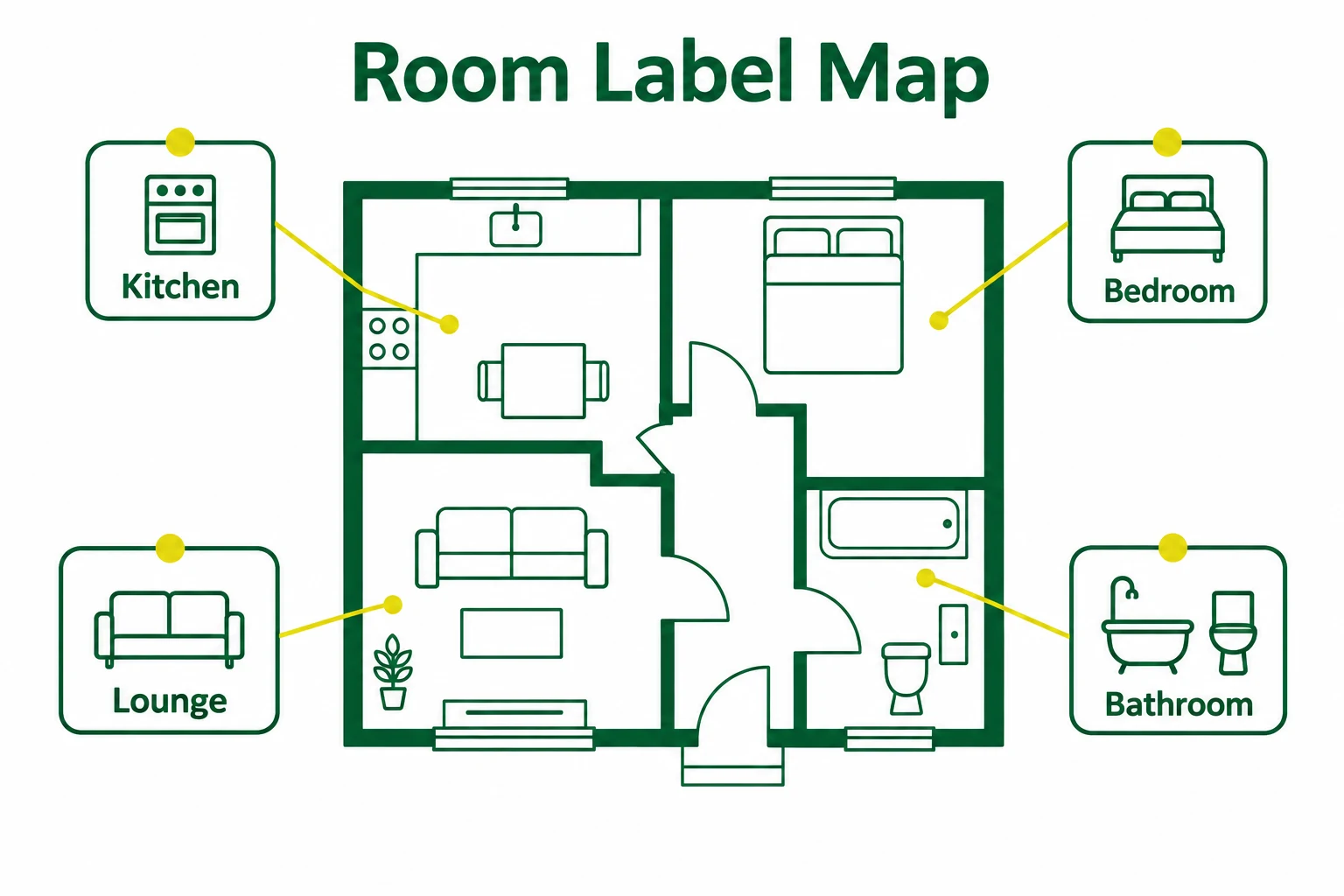
The room label is the foundation of an organised move. Each box should show the destination room in the new property, not just the room it came from. This matters because room names often change between homes. A spare bedroom may become an office, a playroom may become a guest room, and some items may move from one floor to another.
Professional movers often agree the room names before packing begins. They may use simple labels such as main bedroom, kitchen, lounge, bathroom, office, garage or loft. The exact wording matters less than consistency. Everyone involved should understand what each label means.
Labels are most useful when they are placed where they can be seen while the box is being carried. Many teams mark more than one side, so the room name is visible even when boxes are stacked. This avoids unnecessary turning and checking during unloading.
For a whole house move, it can also help to mark rooms at the new property. A simple note on each doorway, matching the labels on the boxes, gives the unloading team instant confirmation. This is especially useful when there are several bedrooms, more than one reception room, or storage areas that look similar.
Room labels should be short and clear. Long descriptions slow people down, and vague labels such as bits, stuff or miscellaneous rarely help later. If a box genuinely contains mixed items, the contents note should explain the mix more clearly.
Priority labels help the first day run smoothly
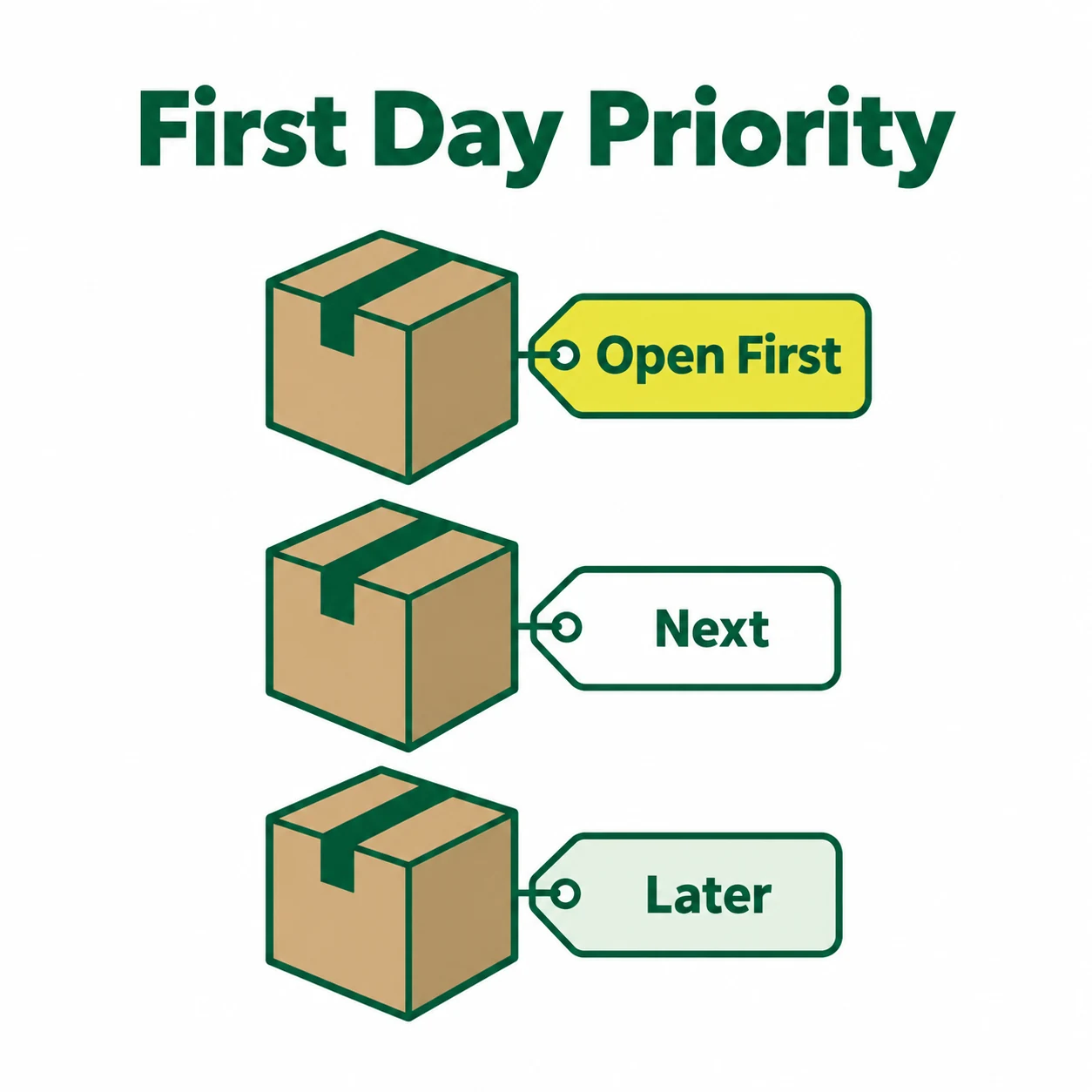
Not every box has the same urgency. A box of books can usually wait. Bedding, basic kitchen items, medication, chargers, toiletries and school or work essentials may be needed quickly. Professional packers often separate these items with a simple priority system.
Priority labels do not need to be complicated. The most useful categories are usually open first, open soon and storage or later. Some households prefer a first night box for each person, or one shared essentials box for the household. The aim is to stop important items being buried among things that can wait.
An open first label should be used sparingly. If half the boxes are marked as urgent, the label loses its value. The best approach is to think about the first evening and the first morning in the new home. What will you need before the main unpacking is complete? Those are the items that deserve priority treatment.
Priority labelling also helps the removal crew. Boxes that are needed quickly can be loaded so they are easier to reach at the other end. This links closely with how crews organise the vehicle for safe access and sensible unloading, as explained in Caremove’s guide to safe loading for a whole house move.
For families, priority notes can be especially useful for children’s items, pet supplies and routine household basics. Being able to find familiar items quickly can make the first night feel calmer, even if not every room is fully unpacked.
Contents notes should be useful, not overwhelming
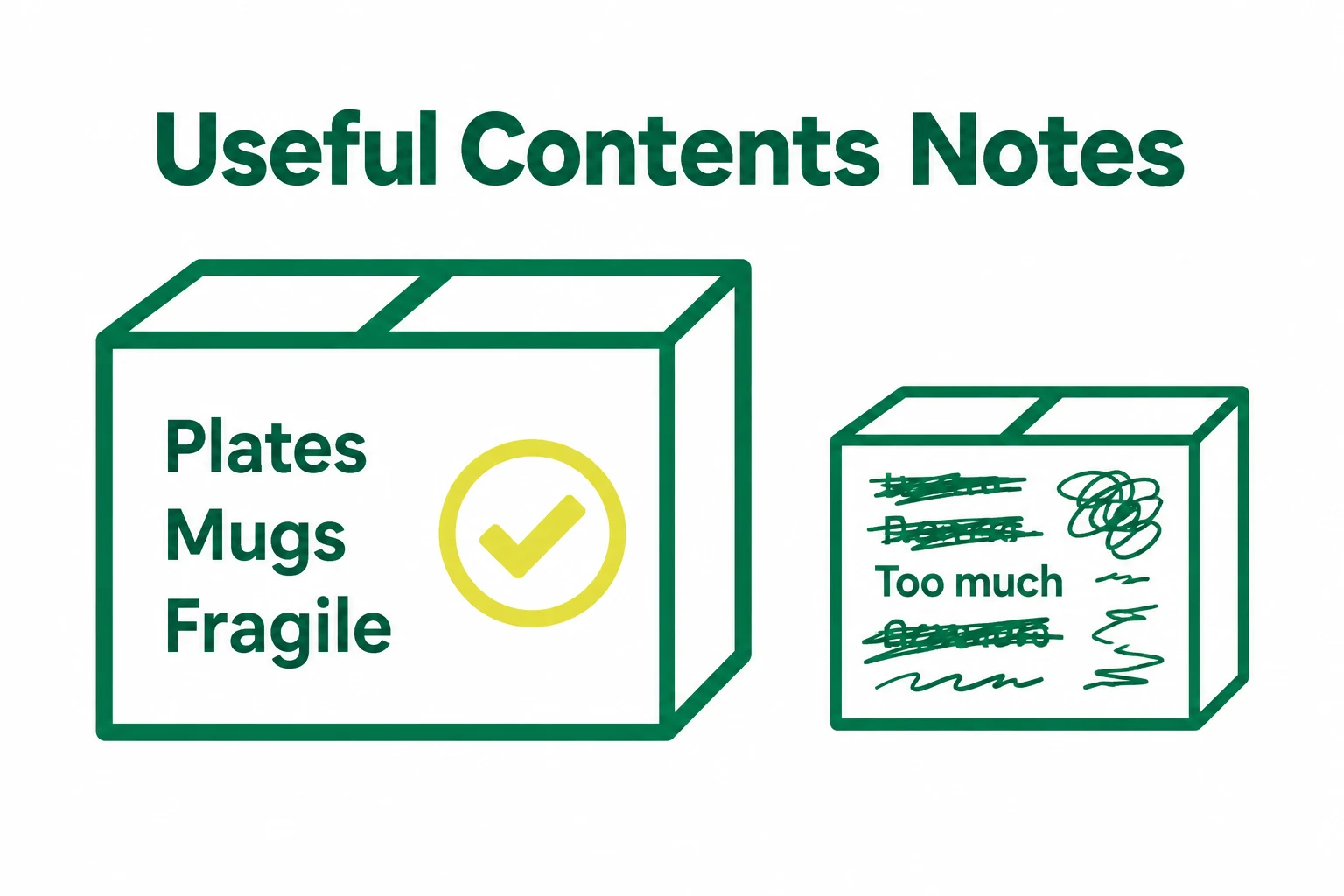
A contents note should help someone make a quick decision about whether to open the box. It does not need to list every item inside. In fact, too much detail can make labels harder to read and slower to use.
Good contents notes group items in a way that makes sense. Examples include pans and utensils, mugs and tea items, towels and toiletries, office files, winter clothing, toys and games, or lamps and small decor. These notes are specific enough to be useful without turning every box into an inventory sheet.
Professional teams also think about what should not be mixed together. Heavy items are usually packed in smaller boxes, while fragile items need space, wrapping and careful positioning. Contents notes can make this visible. A box marked fragile glasses or heavy books gives the crew and the household useful handling information.
For delicate or awkward household items, labelling works alongside proper wrapping and packing materials. Caremove has covered this in more detail in its article on how professional packing protects sofas and boxed goods.
It is also wise to avoid writing sensitive details on the outside of boxes. Labels can be clear without naming private documents, valuables or personal items in full. A discreet contents note, combined with a room label and priority mark, is usually enough.
How movers keep the system consistent
The best labelling systems are simple enough for every member of the team to follow. Professional packers usually agree the format before they begin, then repeat it across the whole home. A typical label might include the destination room, a short contents note and a priority mark if needed.
Consistency matters because packing often happens quickly once the system is in place. If one box says kitchen, another says cooking things, and another says downstairs back room, the unloading team has to pause and interpret. Clear repeated language keeps the move flowing.
Some teams also number boxes or keep a basic room list. This can help with checking that everything has arrived and can be useful when items are going into storage before being unpacked. A numbered list does not need to be complex. It simply creates another way to track boxes if a room contains a large quantity of items.
Labels should also be durable. If a label falls off, smudges or is hidden under tape, it cannot do its job. Professional movers tend to use clear writing, visible placement and practical materials that remain readable throughout handling, loading and unloading.
A consistent system is especially helpful when more than one person is unpacking. Everyone can understand which boxes belong in each room, which ones should be opened first, and which ones can wait until the main furniture is positioned.
A simple labelling method you can use at home
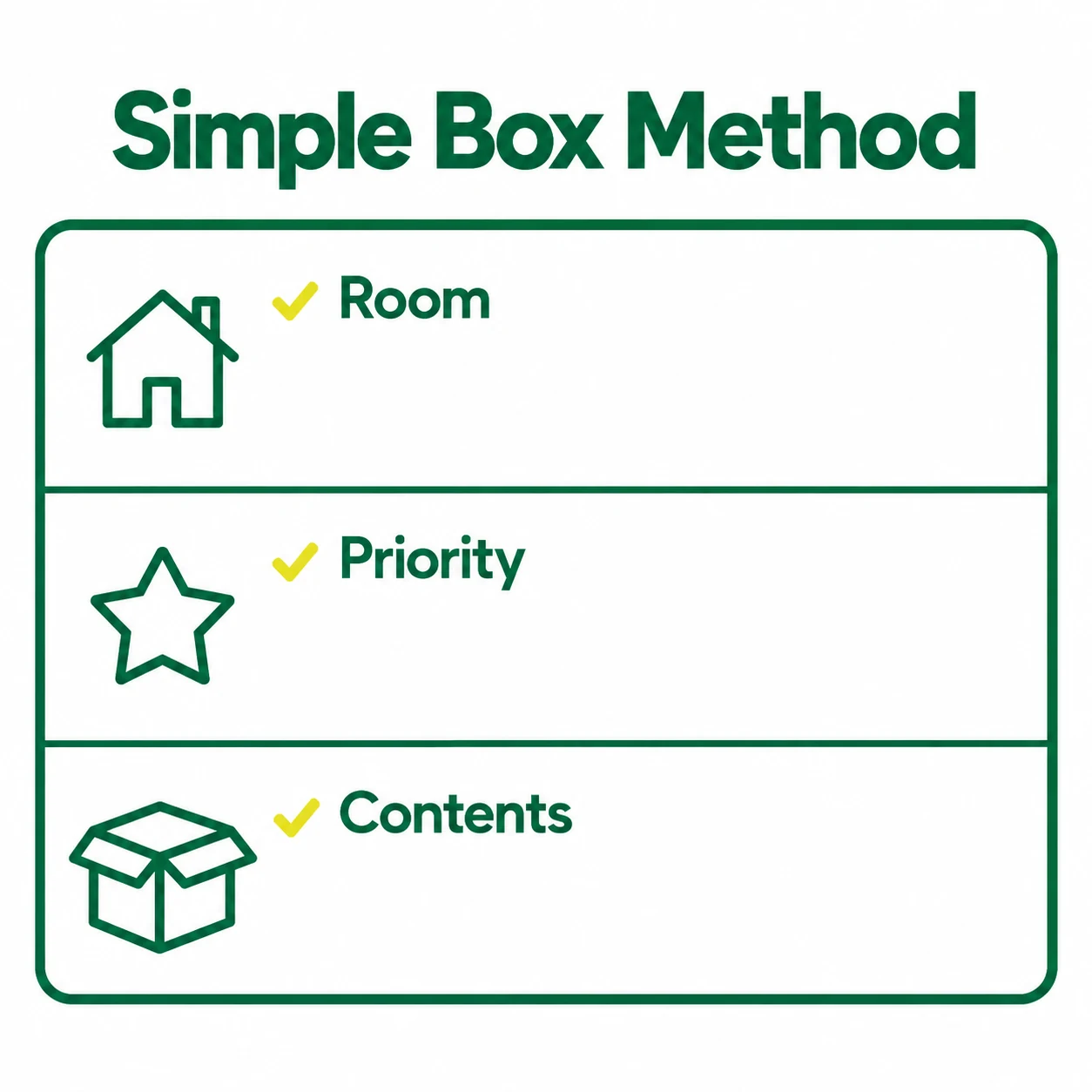
If you are packing some items yourself before the movers arrive, it helps to follow the same basic structure a professional team would use. Keep it clear, consistent and focused on unpacking.
- Write the destination room first. Use the room name in the new home, not just the current room.
- Add a short contents note. Use useful groups such as plates and bowls, bedding, bathroom towels or work documents.
- Mark priority items clearly. Reserve open first for items you will genuinely need straight away.
- Label more than one side. Make the room name visible when boxes are stacked or carried.
- Keep private details discreet. Use general notes where the contents are personal or sensitive.
Before moving day, it is worth walking through the new room plan and deciding what each space will be called. Share those names with the packing team if you are using one. This prevents confusion and helps boxes land in the right place first time.
The goal is not to create a perfect archive of every item you own. The goal is to give each box enough information to support calm, controlled unpacking.
- Room labels should match the rooms in the new home, not only the rooms items came from.
- Priority labels help essential items stay easy to find during the first evening and morning.
- Clear contents notes are more useful than long lists on every box.
- A consistent labelling format helps movers unload boxes into the right rooms more efficiently.
- Good labelling works best when it is planned before packing starts.
Frequently asked questions
What should I write on a moving box label?
Write the destination room, a short contents note and any priority or handling information. For example, kitchen, pans and utensils, open soon gives far more help than a vague label like kitchen stuff.
Should every box have a priority label?
No. Priority labels work best when used only for items you will need quickly. If too many boxes are marked open first, it becomes harder to spot the truly essential ones.
Is it better to label boxes by old room or new room?
Label boxes by the room they should go to in the new home. This helps the unloading team place them correctly and reduces the need to move boxes again later.
Can movers unpack boxes into cupboards and rooms?
Many professional packing and unpacking services can help place items in the right rooms and unpack selected contents. The exact level of help should be agreed before the move so the team knows what you want prioritised.
Make unpacking feel more controlled
If you would like support with careful packing, clear labelling and organised unpacking after your move, Caremove can help you plan a smoother move from the first box to the final room.